Image: Wikipedia / Wikimedia Commons
Image: Wikipedia / Wikimedia Commons
Delhi is one of the world's most vibrant and historically layered cities, where ancient monuments stand alongside modern development and millions of people navigate daily life amid constant energy and change. As India's capital and the seat of its government, Delhi serves as the country's political and cultural hub, yet it remains a place where centuries of history are written into its streets and skylines. This is a city that demands attention—whether you're drawn to its archaeological treasures, its role in shaping modern India, or simply the intensity of urban life as experienced by over eleven million residents.
Delhi sits at coordinates 28.66667 North, 77.21667 East, positioned on the banks of the Yamuna River in northern India. The city lies at an elevation of 227 meters above sea level, giving it a relatively accessible landscape despite being situated on the Indian subcontinent's plateau region. Operating in the Asia/Kolkata timezone, Delhi anchors India's time across the nation and remains one of the country's most strategically positioned urban centers.
The city sprawls across both banks of the Yamuna, with the river serving as a natural dividing line between older and newer districts. Delhi's geography is defined by its position on the Delhi Ridge, a geological formation that runs through the city and provides green spaces and natural landmarks. The wider National Capital Region extends far beyond Delhi's administrative boundaries, creating a metropolitan area that blends seamlessly with surrounding states and satellite cities. The terrain is relatively flat with some elevation variations that create distinct neighborhoods and viewpoints across the cityscape.
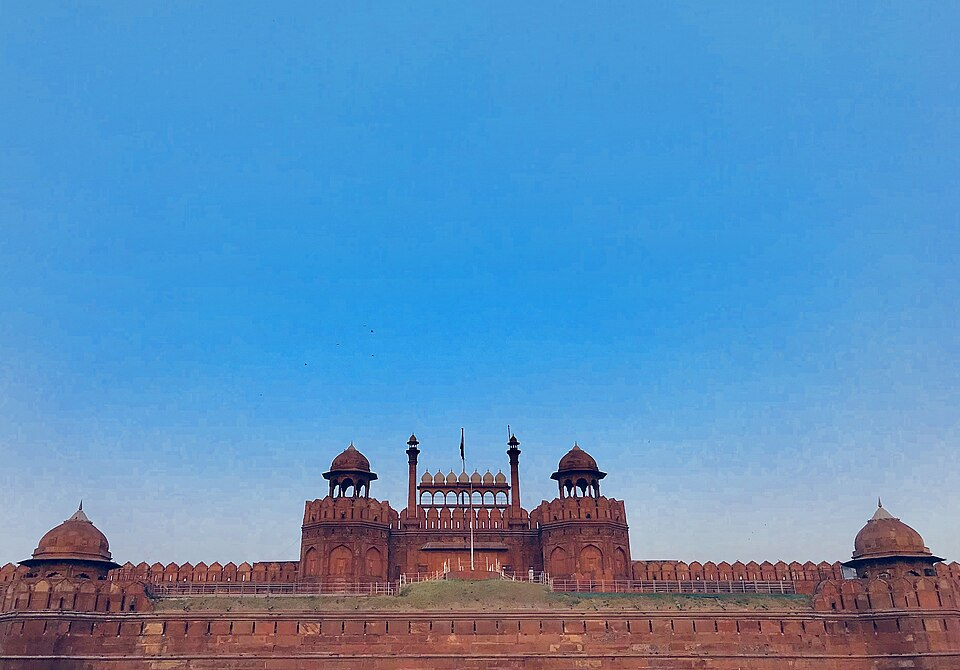
Delhi's historical significance runs deeper than almost any other Indian city. The area has been inhabited for thousands of years, serving as capital for various dynasties and empires. What many visitors associate with historical Delhi centers on Shahjahanabad, the walled city founded in 1648 when the Mughal emperor Shah Jahan made the bold decision to shift his empire's capital from Agra. The construction of this fortified city was completed that same year, and it became the beating heart of Mughal India for the next two centuries.
Shahjahanabad, today known colloquially as Old Delhi to distinguish it from the capital city proper, remained the Mughal seat of power until 1857, when the British Empire established paramountcy over the Indian subcontinent following the decline of Mughal authority. This marked a fundamental shift in the city's trajectory. When India became independent and New Delhi was inaugurated as the nation's capital, the older walled city took on its present name to avoid confusion. The transition from Mughal to British to independent Indian rule shaped every aspect of Delhi's urban character, creating a city where these historical layers remain visible and palpable. Walking through Old Delhi's narrow lanes, past centuries-old markets and mosques, connects visitors directly to this living history.
Delhi's attractions span its entire historical timeline. Old Delhi itself functions as a vast open-air museum, where the walled city's layout and architecture still largely reflect its seventeenth-century design. The narrow, bustling streets lined with shops, temples, mosques, and havelis (traditional mansions) offer an immersive experience of pre-modern urban life. The area pulses with commercial activity and genuine local culture—this is where Delhi's residents actually conduct business and worship, not a preserved relic.
Beyond the walled city, Delhi contains some of India's most significant monuments and archaeological sites. The city's various neighborhoods each tell different stories: some centered on Mughal legacy, others on British colonial architecture, still others on the development of independent India. The ridge areas provide natural spaces for walks and contain historical ruins scattered throughout. Green spaces exist throughout the city despite its density, offering respite from the urban intensity. Delhi's character emerges not just from visiting specific monuments but from understanding how history, geography, and contemporary life interweave throughout the metropolitan area. Museums, markets, religious sites, and cultural institutions operate throughout the city, each providing different windows into Delhi's multifaceted identity.
Delhi serves as one of India's primary transportation hubs. Major airports connect the city to international and domestic destinations. The railway network links Delhi to virtually every significant city across India, making it a natural entry point for many travelers. Within the city, public transportation systems including buses and rapid transit networks help navigate the sprawling metropolis, though traffic and congestion are realities of urban life here. Taxis and auto-rickshaws remain common, and many neighborhoods are navigable on foot despite the city's scale.
Home to over eleven million people, Delhi functions as an economic engine for India and a center for government, business, education, and culture. The city's economy encompasses everything from traditional bazaar commerce in Old Delhi to modern corporate sectors, technology industries, and service providers. Daily life for Delhi residents involves navigating one of the world's most densely populated cities, where managing commutes, finding affordable housing, and accessing services presents ongoing challenges. Yet the city also offers opportunity, employment, and cultural engagement that draws people from across India and beyond. Delhi's residents—a diverse mix of communities, religions, and backgrounds—create the energy that defines the city's character. Understanding Delhi means recognizing both its remarkable vitality and its very real urban pressures.
Delhi's population stands at 11,034,555 residents, making it one of the world's largest metropolitan areas. The city operates at an elevation of 227 meters above sea level and observes Asia/Kolkata timezone. These practical details matter for visitors planning trips, understanding climate patterns, and coordinating with the rest of India's standard time zone.
View larger map — © OpenStreetMap contributors