Image: Wikipedia / Wikimedia Commons
Image: Wikipedia / Wikimedia Commons
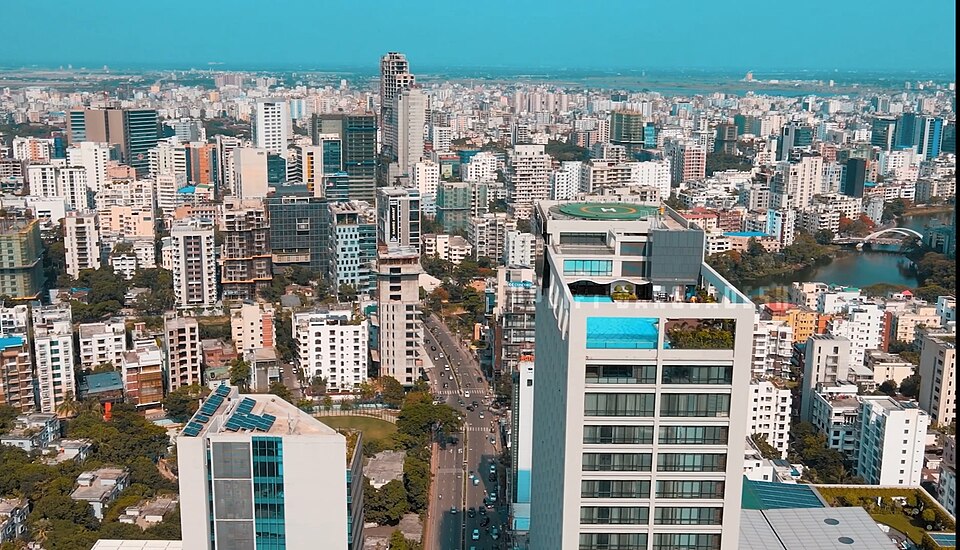
Dhaka, formerly known as Dacca, stands as one of the world's most dynamic and densely populated urban centers. As the capital and largest city of Bangladesh, it pulses with the energy of a nation in motion, blending centuries of history with the urgency of contemporary South Asian life. For visitors and residents alike, Dhaka presents a complex portrait of cultural richness, economic vitality, and the particular challenges and rewards of urban life in the 21st century.
Dhaka occupies a strategic position in the heart of the Ganges Delta, one of the world's most fertile and geologically significant regions. Situated at an elevation of just 23 meters above sea level, the city sprawls across flat terrain that has historically made it vulnerable to flooding while simultaneously providing the agricultural abundance that sustained its growth. The city sits at coordinates 23.7104N, 90.40744E, operating in the Asia/Dhaka timezone, which is Bangladesh Standard Time.
The city's geography is defined by water. Four major rivers—the Buriganga, Turag, Dhaleshwari, and Shitalakshya—bound Dhaka and have shaped its development for centuries. These waterways were once vital arteries for trade and transportation, and they remain central to the city's identity despite modern urbanization. The delta landscape means that the region experiences significant seasonal variation, with the monsoon season bringing heavy rainfall that transforms the landscape and occasionally tests the city's infrastructure.
Dhaka's history stretches back to the medieval period when it emerged as an important center of trade and administration. By the 17th century, under Mughal rule, the city had become wealthy and cosmopolitan, known particularly for its production of fine muslin—a delicate cotton textile that was traded across the Islamic world and eventually to Europe. The prosperity of this era left architectural and cultural marks that remain visible today, though many structures have been lost or heavily modified over the centuries.
The colonial period brought British administration and significant urban transformation. The city became the capital of Bengal Province and later served as an administrative center under the British Raj. The partition of India in 1947 made Dhaka the capital of East Pakistan, and following Bangladesh's independence in 1971, it became the capital of the new nation. This turbulent modern history—marked by political struggle, independence, and national building—shapes contemporary Dhaka's character and the consciousness of its residents.
Dhaka offers visitors glimpses into Bengali culture and South Asian urban life, though approaching the city requires flexibility and open-mindedness. The riverscapes along the Buriganga remain central to experiencing the city's character, with scenes of daily commerce and transportation reflecting patterns that have persisted for generations. The delta landscape supports a surprising variety of neighborhoods, from dense commercial districts to more spacious residential areas where parks and green spaces provide respite.
The city's cultural institutions reflect its importance as a Bengali-speaking center and a hub for South Asian arts and intellectual life. Museums, galleries, and cultural venues throughout the city showcase contemporary and historical works relevant to Bengali and Bangladeshi identity. The celebration of language and culture during national holidays and festivals reveals the values and pride central to Dhaka's identity. Markets throughout the city showcase local crafts, textiles, and agricultural products, offering windows into the economic life that sustains millions of people. Religious sites of various traditions are scattered throughout the city, reflecting Bangladesh's diverse population and the coexistence of different communities.
The surrounding delta landscape, while heavily developed and modified by human habitation, retains ecological significance. For those interested in understanding the region's natural systems, designated wetlands and preserved areas near Dhaka demonstrate the biodiversity of the Ganges Delta before development.
Dhaka is well-connected to the rest of Bangladesh and to neighboring countries. Hazrat Shahjalal International Airport serves as the primary entry point for air travel, with regular domestic and international flights. The city is connected by rail and road to other major cities in Bangladesh and to neighboring India. Within the city, transportation includes bus networks, auto-rickshaws, taxis, and an expanding rapid transit system. The density of the city means that distances can be deceptive—what appears close on a map may take considerable time to traverse during busy periods.
With a population of 10,356,500 within the city proper and estimates suggesting the metropolitan area approaches 36.6 million, Dhaka ranks as the world's second largest city by population and the most densely populated built-up urban area globally. This staggering concentration of humanity shapes everything about daily life. The city ranks fourth in South Asia and 55th globally in terms of GDP, reflecting its role as Bangladesh's economic engine.
The economy depends heavily on textiles and garment manufacturing, which employ hundreds of thousands and drive the nation's export economy. Service industries, telecommunications, banking, and education also sustain millions. The contrast between affluent neighborhoods like Gulshan—among South Asia's most prestigious addresses—and dense working-class districts reflects the economic disparities that characterize the city. For most residents, Dhaka is a place of opportunity where entrepreneurship, education, and connection to global markets remain central concerns.
Dhaka operates on Asia/Dhaka timezone. The city sits at 23 meters elevation above sea level at coordinates 23.7104N, 90.40744E. Weather is tropical and monsoon-influenced, with hot, humid conditions most of the year and heavy rainfall during monsoon season. Visitors should plan accordingly and stay informed about local conditions and safety considerations before traveling.
View larger map — © OpenStreetMap contributors