Image: Wikipedia / Wikimedia Commons
Image: Wikipedia / Wikimedia Commons
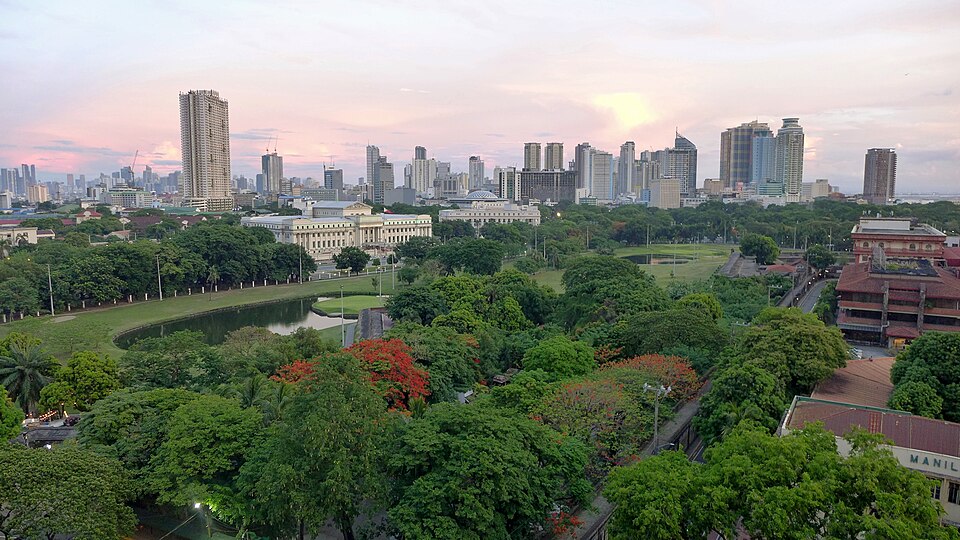
Manila stands as the capital and vibrant pulse of the Philippines, a sprawling metropolis where centuries of history collide with modern urban energy. Located on the eastern shore of Manila Bay, this densely populated city serves as the political, economic, and cultural center of the nation. For visitors and locals alike, Manila presents a complex, fascinating portrait of Filipino life—a place where you'll encounter colonial architecture alongside contemporary development, where traditions persist within one of Asia's most dynamic urban environments.
Manila sits at coordinates 14.6042°N, 120.9822°E on the island of Luzon, positioned just 13 meters above sea level on the eastern shore of Manila Bay. This waterfront location has shaped the city's development for centuries, making it a natural hub for maritime trade and commerce. The city's geography reflects its tropical climate, with Manila Bay providing both economic opportunity and environmental consideration for the millions who call this place home.
The city proper is remarkably compact yet intensely populated, with approximately 1.6 million people concentrated within its boundaries, making it one of the world's most densely populated cities. The greater Metro Manila area extends far beyond the city proper, encompassing numerous municipalities and creating an urban agglomeration that houses over 14 million people. This density creates a distinctive urban landscape where neighborhoods transition rapidly, where high-rise buildings stand adjacent to heritage districts, and where the pace of life moves at an unmistakably Manila tempo.
Manila operates on Asia/Manila timezone (UTC+8), which remains consistent throughout the year without daylight saving adjustments. The city's elevation of 13 meters means it sits very close to sea level, a geographical reality that influences everything from drainage patterns during typhoon season to the types of vegetation that thrive in the urban environment.
Manila's history stretches back centuries before Spanish colonization, when it was an important trading settlement. The arrival of Spanish conquistador Miguel López de Legazpi in 1571 marked a transformative moment, as he established a colonial city that would become the administrative center of the Spanish Philippines for over three centuries. This colonial period left indelible marks on the city's architecture, religion, and cultural identity—marks that remain visible today in the form of historic churches, fortified walls, and street layouts that echo Spanish urban planning principles.
The walled city of Intramuros represents perhaps the most tangible connection to this colonial past. Built to protect Spanish settlers and their interests, Intramuros developed its own distinct character and continues to draw those interested in understanding how Manila's identity was forged during the Spanish period. The city's religious heritage, deeply influenced by Spanish Catholicism, shaped not only the physical landscape but also the rhythms of daily life and community celebration that persist today.
The twentieth century brought dramatic changes—American colonial administration, Japanese occupation during World War II, independence in 1946, and the subsequent development of Manila as a modern Southeast Asian capital. These historical layers contribute to the complex character visitors encounter today, where historical consciousness and contemporary ambition coexist.
Manila's cultural landscape offers genuine opportunities for exploration. The city contains numerous museums and cultural institutions that document Philippine history, art, and heritage. Historic districts preserve architectural styles and street patterns that tell stories of different eras. Religious sites, from grand cathedrals to smaller neighborhood churches, represent important gathering places and architectural landmarks throughout the city.
The waterfront areas along Manila Bay offer opportunities to experience the city's relationship with water, whether watching the sunset over the bay or understanding the maritime heritage that built this city. Parks and green spaces, though limited by the city's density, provide respite from urban intensity. Beyond the city proper, the surrounding regions offer natural attractions and cultural sites that complement a Manila visit. The natural landscape of the broader region—with nearby mountains, coastal areas, and agricultural zones—provides context for understanding how Manila functions as the urban center of a much larger geographical area.
Manila serves as the primary international gateway to the Philippines, with major airports connecting the city to destinations worldwide. Numerous domestic flights link Manila to other Philippine cities. The city possesses road networks, public transportation systems, and water transport options that facilitate movement both within the city and to surrounding areas. Local transport infrastructure continues to evolve as the city addresses the challenges of serving its massive population.
For the millions who live in Manila, this city represents opportunity, community, and daily persistence within one of Asia's most challenging urban environments. The city functions as the economic engine of the Philippines, drawing workers from across the nation seeking employment in business, government, services, and manufacturing sectors. Manila's ports handle significant cargo traffic, its financial districts concentrate banking and corporate headquarters, and its streets bustle with the commerce and activity that characterizes a major Southeast Asian capital.
Daily life in Manila reflects both significant economic disparity and remarkable human resilience. Families navigate crowded neighborhoods, street vendors serve as important economic actors and community fixtures, and informal economies operate alongside formal business structures. Despite infrastructure challenges, residents maintain strong community bonds, celebrate cultural and religious traditions, and participate in the ongoing evolution of their city.
Manila's population stands at approximately 1.6 million within the city proper, though the metropolitan area contains several times this number. The city sits at an elevation of 13 meters above sea level in the Asia/Manila timezone (UTC+8). The tropical climate brings warm temperatures year-round, with a distinct wet season during monsoon months. These practical realities shape everything from what to pack to how the city functions seasonally.
View larger map — © OpenStreetMap contributors