Image: Wikipedia / Wikimedia Commons
Image: Wikipedia / Wikimedia Commons
São Paulo is not Brazil's capital—that honor belongs to Brasília—but it is unquestionably the nation's heart. With a population of 12,400,232 people, it stands as the most populous city in Brazil, South America, and the entire Western Hemisphere. This vast urban expanse exerts a gravitational pull on culture, finance, and innovation across the region and the world. The city's Latin motto, "Non ducor, duco" (I am not led, I lead), captures something essential about the São Paulo character: a place that sets trends rather than follows them.
Perched at 769 meters above sea level on the Piratininga Plateau, São Paulo occupies a strategic position in southeastern Brazil's interior, well away from the coast. The city sits at coordinates -23.5475N, -46.63611E, and operates on America/Sao_Paulo timezone (Brasília Time). This elevated location, combined with the city's inland position, has historically made it a crossroads for commerce and migration. The plateau setting means that São Paulo enjoys a subtropical climate with distinct seasons—warm, humid summers from December through March and cooler, drier winters from June through August.
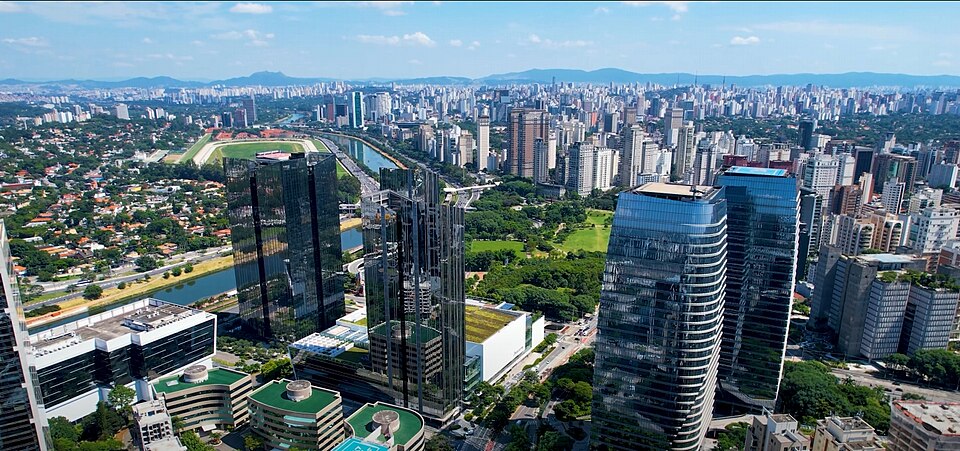
The metropolitan area sprawls across the landscape with an intensity that can overwhelm first-time visitors. Unlike cities built around a single compelling landmark or central waterfront, São Paulo is essentially infinite in its urban texture, spreading across rolling terrain in all directions. This diffuse geography has shaped how the city functions, making it essential to understand neighborhoods as semi-distinct cities within the larger whole. The Tietê River, which winds through the metropolitan area, has long served as an important geographic and cultural reference point, though today it carries heavy urban infrastructure alongside its waters.
The city was founded in 1554 by Jesuit missionaries seeking to spread Christianity to indigenous populations. The name "São Paulo" honors Paul the Apostle, and residents of the city are known as paulistanos. For centuries, São Paulo remained a modest settlement, but the discovery of gold in Minas Gerais in the late seventeenth century transformed it into a crucial supply and trading center. From here, bandeirantes (explorers and traders) ventured deep into the Brazilian interior, gradually expanding Portuguese control over vast territories.
São Paulo's modern trajectory accelerated dramatically in the twentieth century. Immigration, particularly from Italy, Japan, and the Middle East, created a city of extraordinary cultural diversity and entrepreneurial energy. The development of coffee plantations in the surrounding state provided immense wealth that fueled industrialization. By mid-century, São Paulo had transformed into a manufacturing powerhouse, and this economic dynamism continues to define the city today. That history of constant reinvention and forward momentum remains deeply embedded in the city's identity.
São Paulo's attractions are as varied as the city itself. The city contains world-class museums covering art, history, and culture, with institutions housed in both traditional and contemporary buildings. The cultural calendar never stops—exhibitions, theater productions, concerts, and film festivals happen continuously throughout the year. In fact, UNESCO has designated São Paulo as a "City of Film," recognizing its importance to cinema and visual arts. The city has also earned the title "World Capital of Gastronomy," reflecting the extraordinary range of culinary traditions represented in its neighborhoods and the creativity of its food scene.
The built environment itself tells stories. Neighborhoods like Liberdade showcase the legacy of Japanese immigration through architecture, shops, and public spaces. Pinheiros and Vila Madalena pulse with contemporary creativity, street art, and the energy of younger residents. The Ibirapuera neighborhood contains green space and cultural institutions that offer respite from urban intensity. Public parks, though sometimes challenged by urban pressures, provide important gathering spaces for residents. Walking through different neighborhoods reveals distinct identities—São Paulo is best understood not as a single entity but as a collection of communities, each with its own character and appeal.
São Paulo is connected to the world through multiple international airports, making it easily accessible for travelers from across the globe. Within the metropolitan area, transportation options include buses, a metro system, and countless informal transit options. The city's sheer size means that travel between neighborhoods can be time-consuming, and understanding how to navigate the urban landscape is essential for both visitors and new residents. Taxis and ride-sharing services operate throughout the city, and walking remains viable in many neighborhoods, though scale and traffic must always be considered.
For paulistanos, this city is a place of constant striving and reinvention. The economy spans manufacturing, services, technology, finance, and media—São Paulo generates a disproportionate share of Brazilian GDP. The city attracts ambitious people from across the country and world, all drawn by economic opportunity and cultural vitality. This creates a cosmopolitan atmosphere, though also a competitive intensity that can feel either invigorating or exhausting depending on one's perspective. Fashion, design, and entertainment industries flourish here, alongside traditional commerce and industry.
The city's population of 12,400,232 makes São Paulo a megacity by any measure. Its elevation of 769 meters above sea level contributes to a temperate climate compared to coastal Brazilian cities. The timezone is America/Sao_Paulo, three hours behind Greenwich Mean Time. For practical purposes, visitors should plan for a large, complex city that rewards curiosity and patience, and where time spent exploring neighborhoods often proves more memorable than any single landmark.
View larger map — © OpenStreetMap contributors